


Wether you require one or multiple compressors, wet and dry tank(s), air dryer(s),
oil & water separator, or even a nitrogen generator system,
we build from ground to top your custom solution.


Our enclosures and skids allows endless possible configurations inside.
covering lenghts from 4 to 40 feet and additionnal height and width options,
our designs accomodate any system you require.
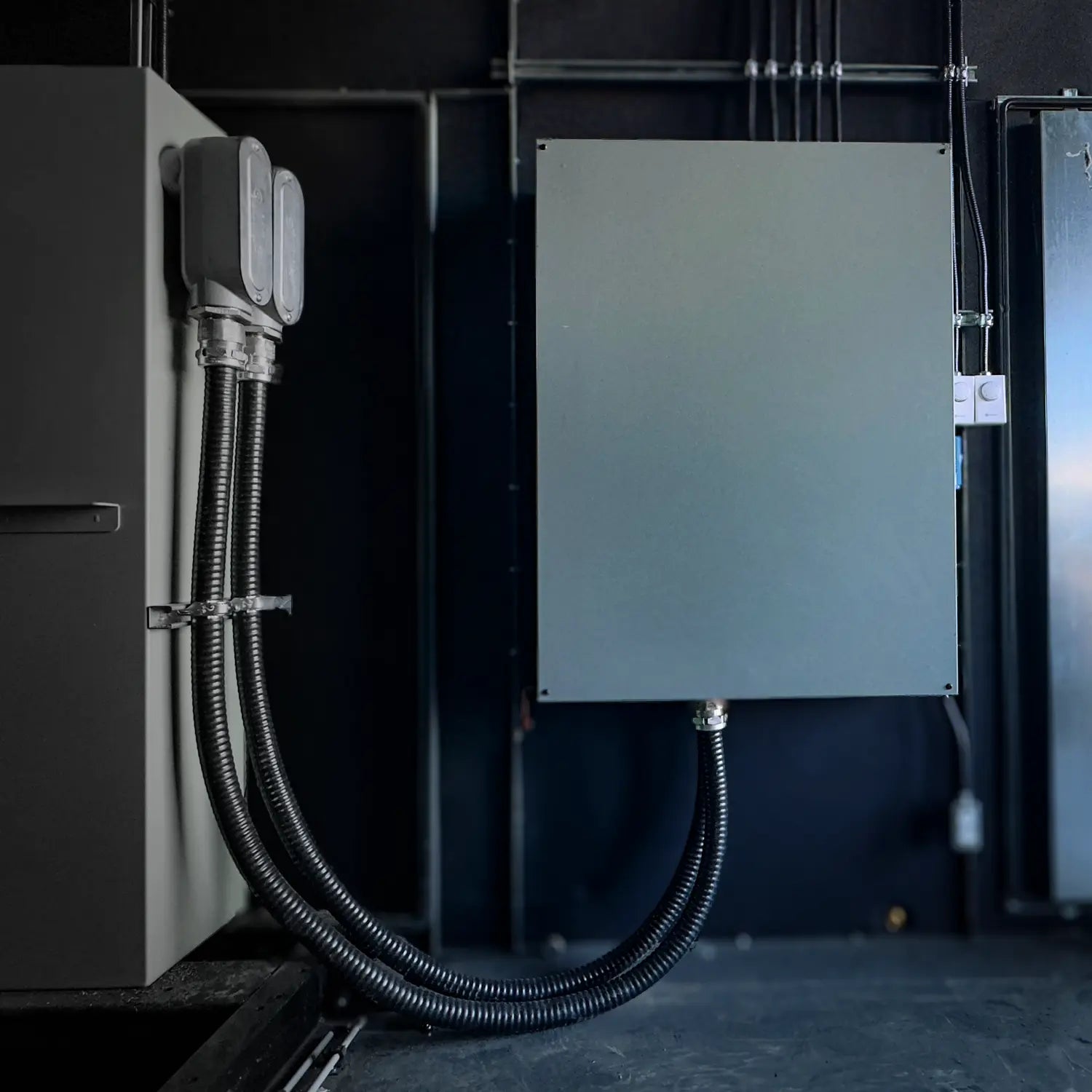
Electrical
The Nerve Center of a Compressed Air Enclosure
- Power Distribution: Keeps motors, fans, dryers, and controls running smoothly.
- Automation & Control: PLCs manage cycles, monitor performance, and trigger alarms when needed.
- Safety Features: Includes overload protection, grounding, surge suppression, and emergency shutoffs.
- Monitoring: Sensors and displays provide real-time diagnostics and support predictive maintenance.
- Durability: Housed in NEMA 4 rated enclosures to resist dust, moisture, and heat.
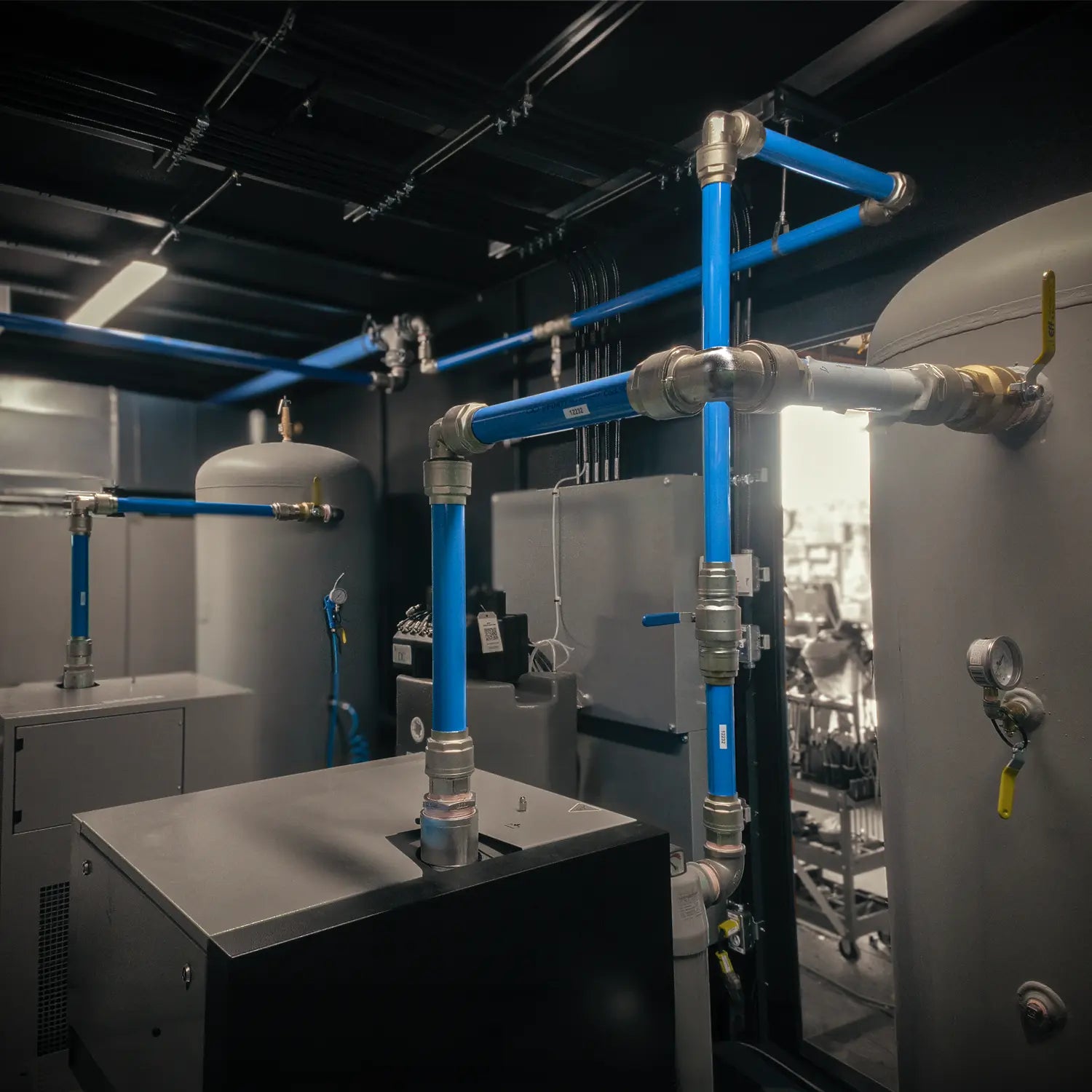
Piping
The circulating system of a Compressed Air Enclosure
- Maintains Pressure: Prevents drops that waste energy and reduce performance.
- Controls Moisture: Sloped lines and drains remove water and contaminants.
- Prevents Leaks: Quality materials and fewer joints cut energy loss and maintenance.
- Improves Safety: Reduces vibration, corrosion, and failure risks.
- Allows Growth: Designed for easy expansion and reconfiguration.
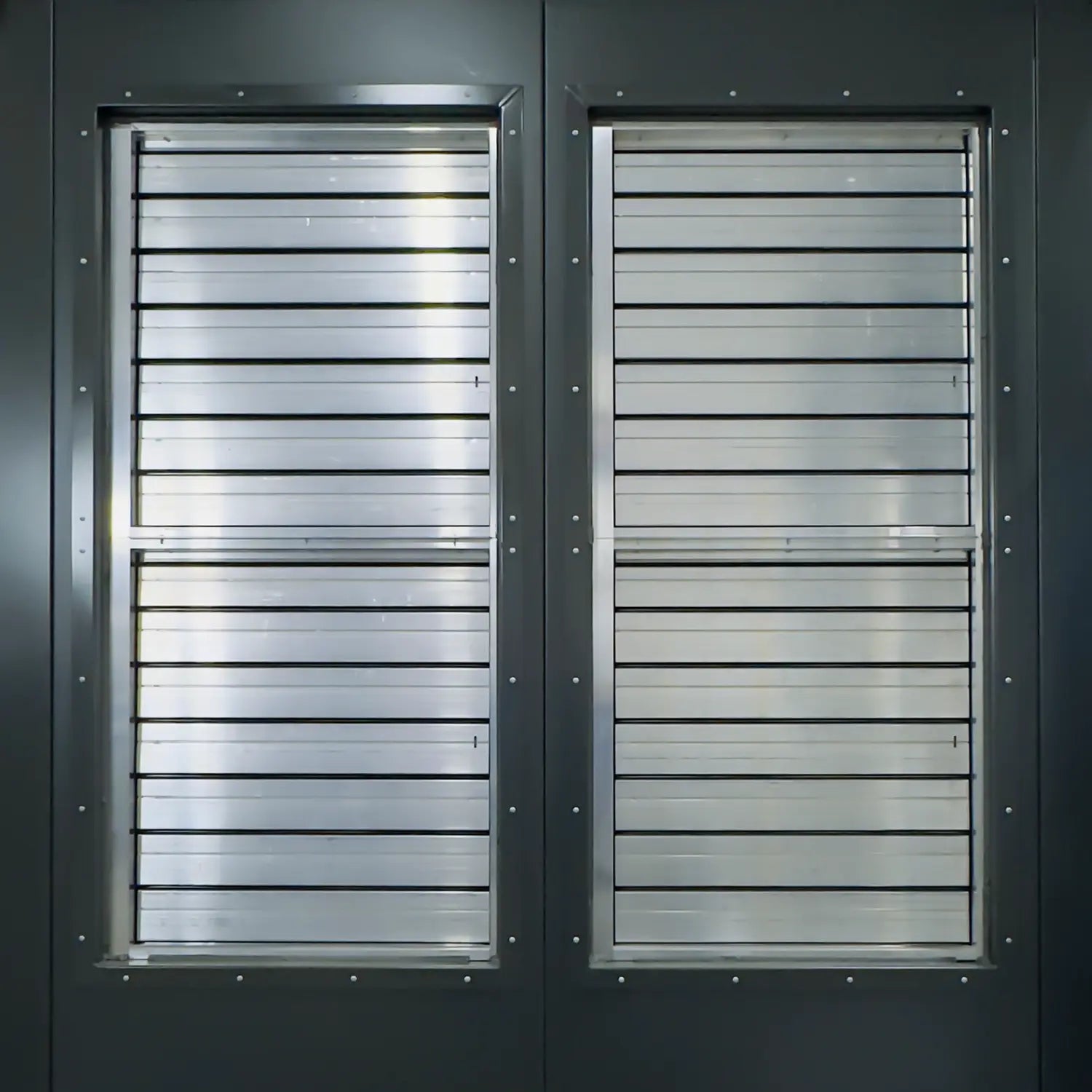
Ventilation
Essential to keep compressors cool, efficient, and reliable.
- Prevents Overheating: Maintains performance and prevents damage.
- Boosts Efficiency: Cooler air reduces energy use and costs.
- Extends Equipment Life: Protects seals, motors, and electronics from heat stress.
- Improves Safety: Prevents buildup of fumes, vapors, and fire risks.
- Controls Noise: Helps manage heat and sound for a safer workspace.
Good airflow means better performance, lower costs, and longer system life.

Double doors provide easy access
to equipments' maintenance.